
Understanding the Link Between Vestibular Balance and Visual Function

When most people think about balance, they picture the inner ear and its role in helping us stay upright. While the vestibular system in the inner ear is essential for spatial orientation and equilibrium, it doesn’t work alone. Our eyes and visual processing play an equally important role in keeping us steady, coordinated, and confident in movement. When these two systems don’t align, conditions such as binocular vision dysfunction (BVD) may arise, leading to dizziness, imbalance, and visual discomfort.
How the Vestibular and Visual Systems Work Together
The vestibular system provides constant feedback about where your head and body are in space. Your visual system confirms and reinforces this information, giving you a stable frame of reference. Together, they allow you to walk without veering, read comfortably without nausea, and maintain balance during daily activities.
When there’s a mismatch, your brain struggles to reconcile the conflict. This disconnect can cause disorientation, blurred vision, vertigo, or a feeling of unsteadiness.
The Role of Binocular Vision Dysfunction (BVD)
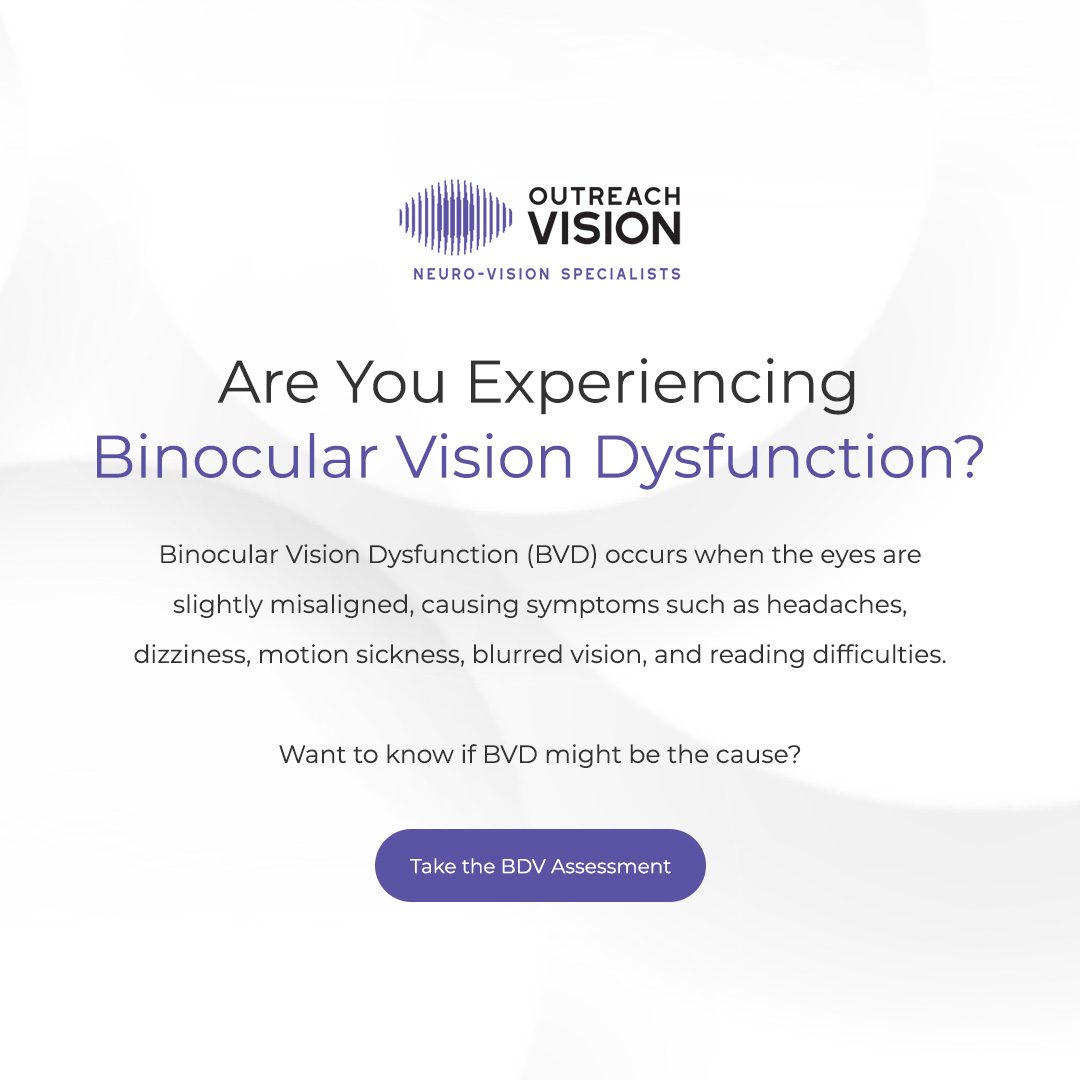
BVD occurs when the eyes don’t work together in perfect coordination. Even a small misalignment between the eyes can force the brain to work overtime to fuse the images into one. For many people, this results in eye strain, headaches, dizziness, and balance problems.
Because both the vestibular and visual systems are so interconnected, BVD often exacerbates balance issues. Patients may notice difficulty walking straight, sensitivity to motion, or worsening symptoms in visually busy environments like grocery stores.
Vestibular Balance Rehabilitation and Vision Therapy
Fortunately, treatments are available to restore harmony between the eyes and balance system. Vestibular rehabilitation therapy helps retrain the brain and inner ear to process balance signals more effectively. This may include specialized exercises that improve gaze stability, posture, and spatial awareness.
When combined with vision therapy or prism lenses designed to correct eye misalignment, patients often experience a significant reduction in symptoms. Addressing both systems together provides a more complete, long-lasting solution to dizziness, imbalance, and visual discomfort.
Why Early Evaluation Matters
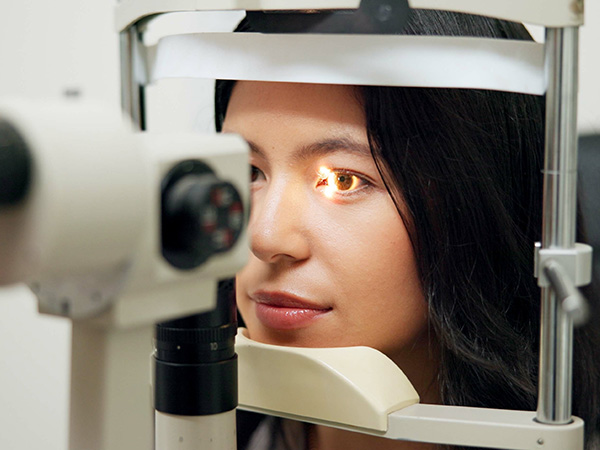
Since balance and visual function are so closely connected, subtle issues can be easily overlooked or misdiagnosed. Comprehensive eye exams that evaluate binocular vision, alongside vestibular assessments, can help identify the root cause of symptoms. The sooner a patient receives targeted care, the faster they can return to clear vision, improved balance, and better quality of life.
Take Control of Your Vision and Stability
The connection between vestibular balance and visual function highlights how deeply integrated our sensory systems are. When vision and balance don’t align, daily life can feel unstable and exhausting. By recognizing the role of BVD and combining vestibular balance rehabilitation with vision care, patients can achieve greater comfort and stability.
If you’ve been struggling with dizziness, unsteady walking, or visual strain, Outreach Vision is here to help. Schedule a consultation to learn whether BVD or vestibular imbalance may be affecting your daily life, and discover solutions designed to restore both clarity and balance. Contact our office in Platte City, Missouri, by calling (816) 858-6080 to book an appointment today.


Our Services
Contact Info
Hours of Operation
By Appointment Only*- Monday 10:00 AM - 5:00 PM
- Tuesday 10:00 AM - 5:00 PM
- Wednesday 10:00 AM - 5:00 PM
- Thursday 10:00 AM - 5:00 PM
- Friday 10:00 AM - 5:00 PM
- Saturday 10:00am - 3:00pm
- Sunday Closed
© 2026 Outreach Vision. All rights Reserved. Accessibility Statement - Privacy Policy - Terms & Conditions - Sitemap
Powered by: